Author: Niels Hexspoor

Aurora Staff Training in Kosice: Ways Forward in Fostering Inclusive and Enriching Practices and Policies at the Aurora Universities

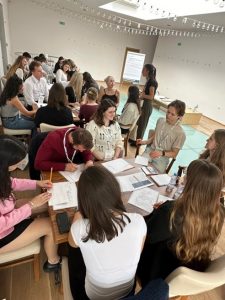
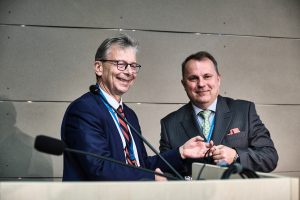
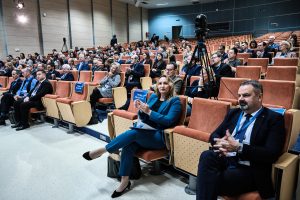
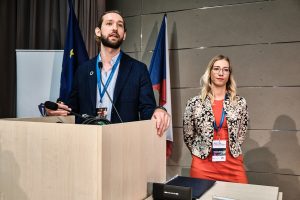
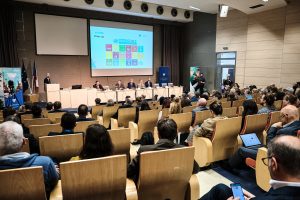
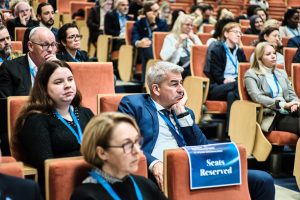
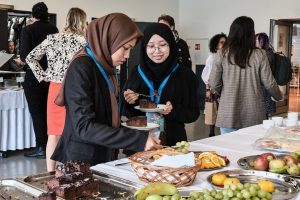
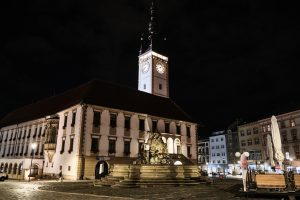
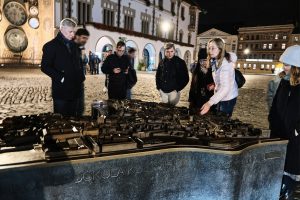
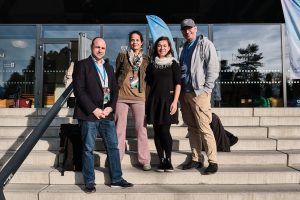
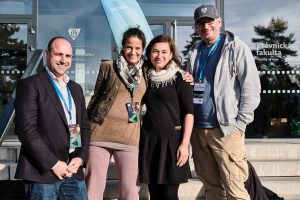
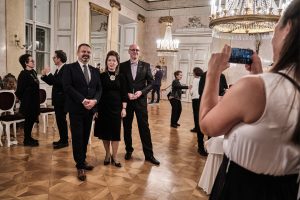
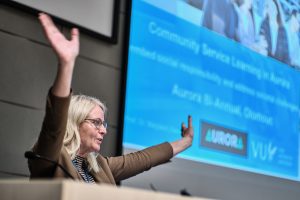
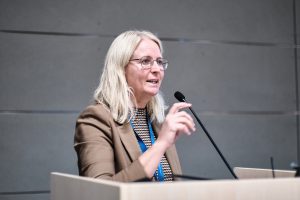
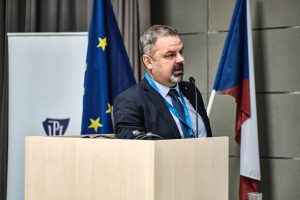
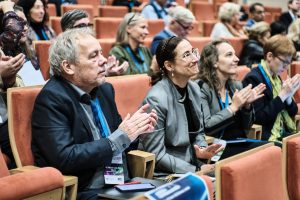
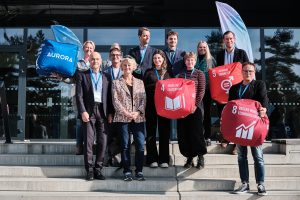
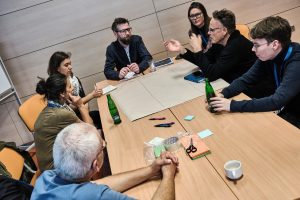
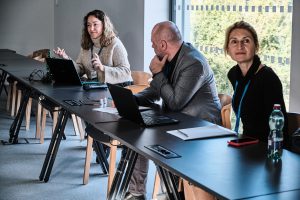
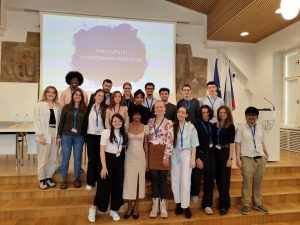
On September 24, the second Aurora Capacity Development Training Event of this year was held in Kosice, Slovakia, titled “Diversity and Inclusion – Ways Forward in Fostering Inclusive and Enriching Practices and Policies at the Aurora Universities.”

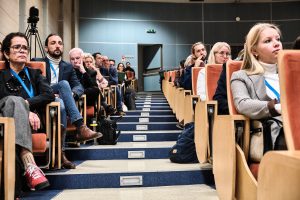
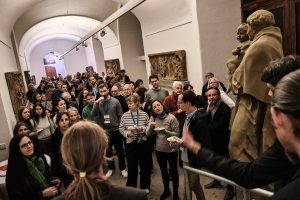
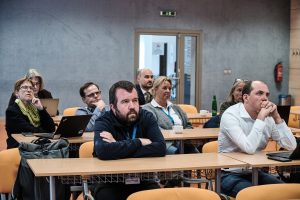
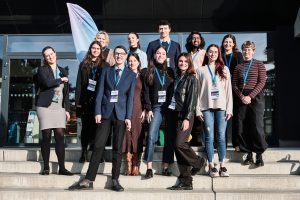
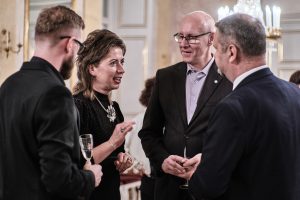
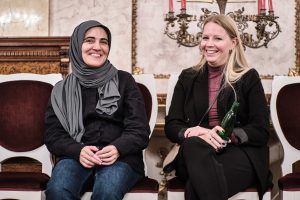
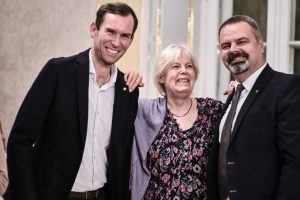
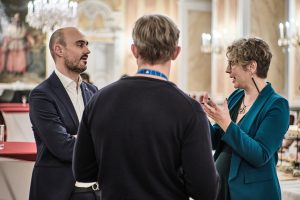
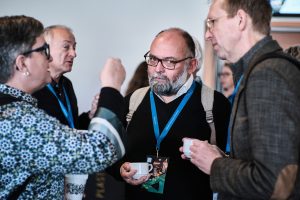
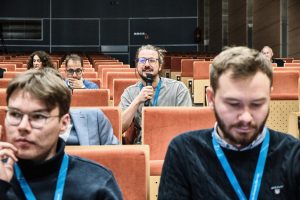
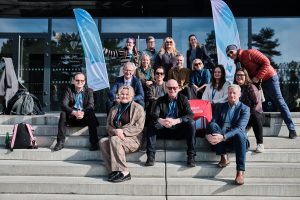
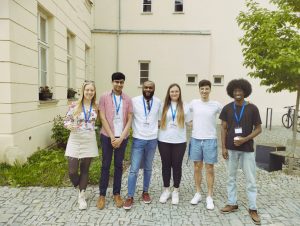
The event gathered 65 participants, including senior management, academics, administrative staff and international and domestic students from Pavol Jozef Šafárik University (UPJS). Representatives from South-West University “Neofit Rilski” also joined in person with their extended Aurora team.
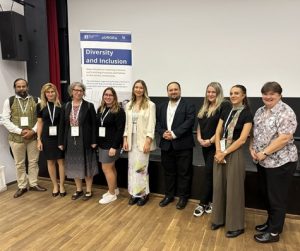
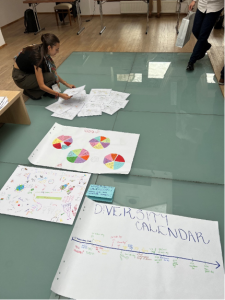
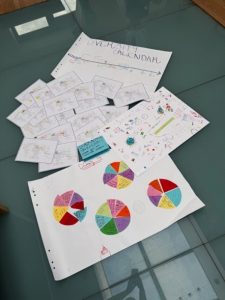
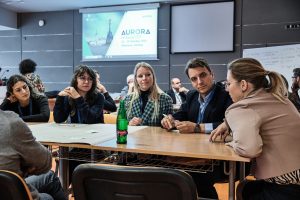
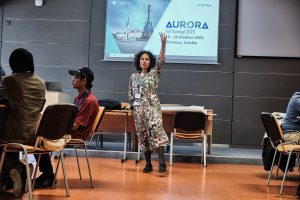
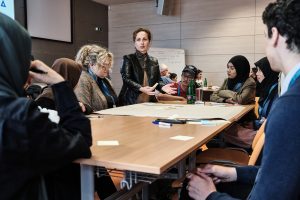
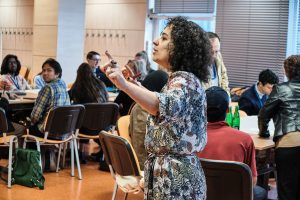
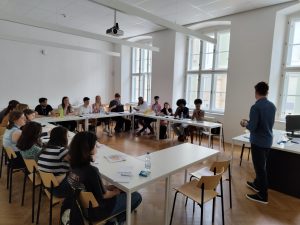
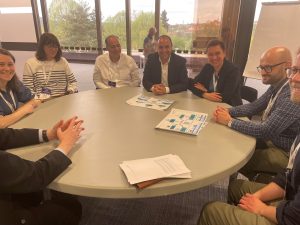
Together, the participants engaged in an interesting and interactive training programme jointly designed and led by colleagues from UPOL, UPEC and VU with the UPJS  local experts and students. Its main aim was to open a wider dialogue on fostering inclusive and enriching practices and policies at Aurora higher education institutions and in a broader societal context where universities act as role models.

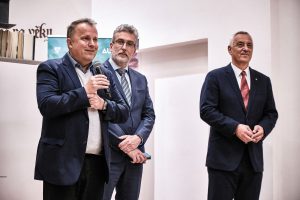
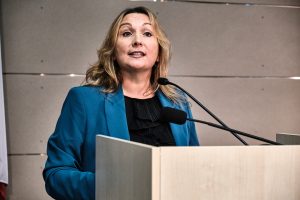
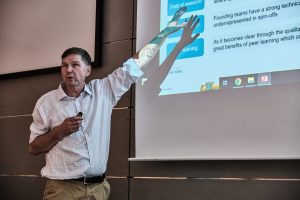
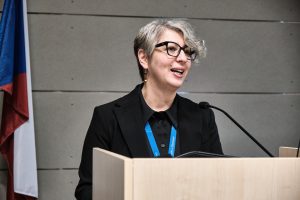
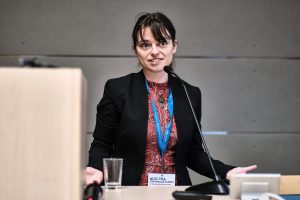
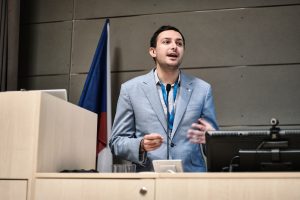
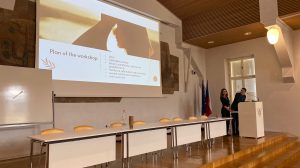
The full-day event was opened by welcome words from Vice-rector Silvia Rucinska and an introduction to Aurora 2030 ambitions, CDP programme and Aurora values of Inclusion and Diversity by Dr. Selma Porobic and Dr. Oleksandr Khyzhniak. It was followed by positioning the diversity and inclusion topic within the UPJS context and sharing the UPJS’s perspective, presented by Vice-rector Silvia Rucinska, who also highlighted current achievements, challenges and opportunities for improvement at UPJS.

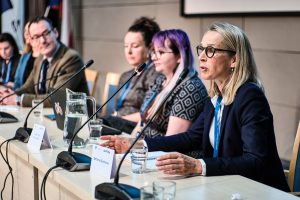
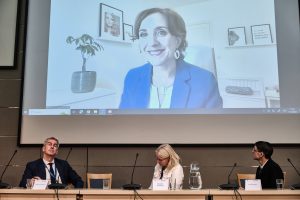
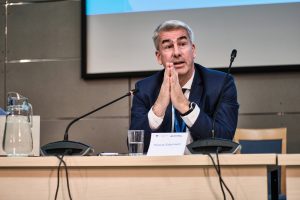
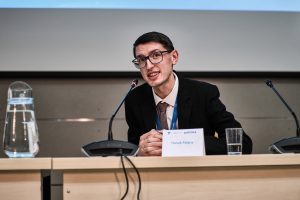
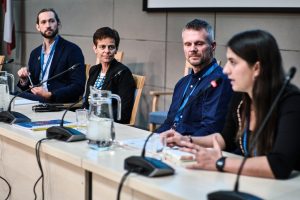
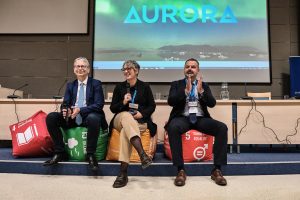
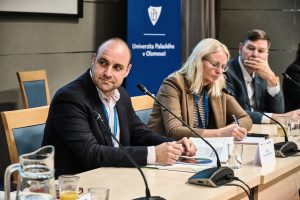
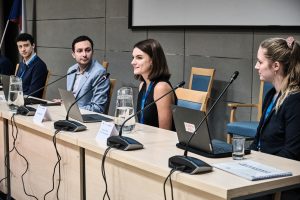
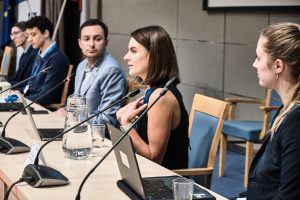
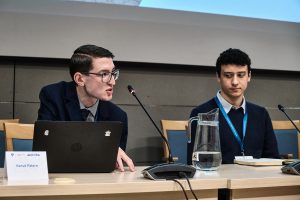
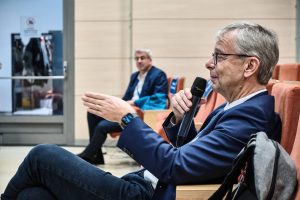
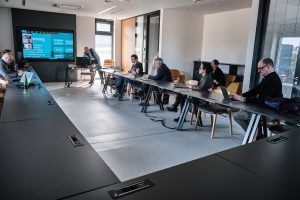
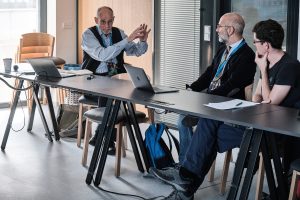
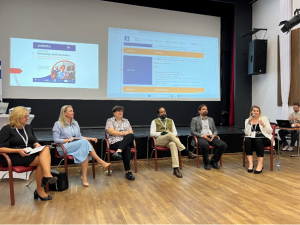
The full day programme proceeded with an opening expert panel discussion ‘Diversity and Inclusion at Aurora Universities – Trend or Transformation?’ that brought together senior leadership and academics of three Aurora universities including  Ludmila Elbert (Vice-Rector for Education, (UPJS), Zelmira Macejova (Vice-Dean, Faculty of Medicine, UPJS), Jozef Benka (Vice-Dean, Faculty of Arts, UPJS), Pavlina Flajsarova (Vice-Dean, Faculty of Arts, UPOL), and Puneet Bindlish (Professor, Faculty of Religion and Theology, VU Amsterdam). They discussed both whose responsibility and how it is to foster more inclusive and equitable learning environments across our universities as well as highlighting both challenges and positive developments and practices from their home institutions.

It was followed by two interactive workshops for staff and students in the afternoon:

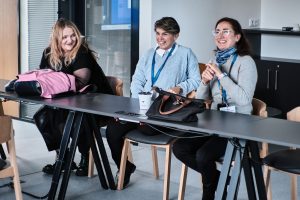
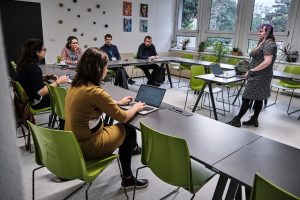
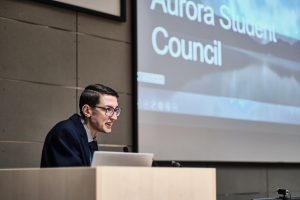
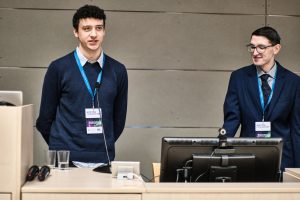
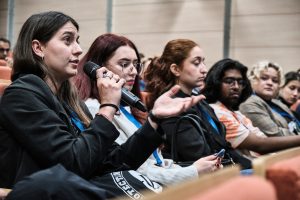
a student peer learning event ‘Student Peer Learning on Diversity and Intercultural Competencies’, led by Mathilde Chaumont (UPEC) and Simona Gibalova (UPJS), and an academic interactive session ‘Educational Practices and Mixed Classroom Approach for Academic Staff’ moderated by Pavlina Flajsarova (UPOL) and Ingrid Madárová (UPJS).

While the student peer learning workshop focused on developing intercultural competencies and sharing ideas on how to contribute towards a more diverse learning environment by improving personal attitudes and beliefs, the staff workshop focused on techniques for fostering inclusive educational practices in the classroom.
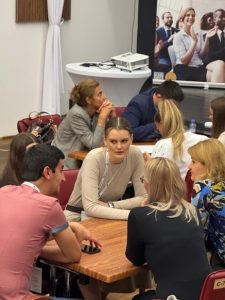
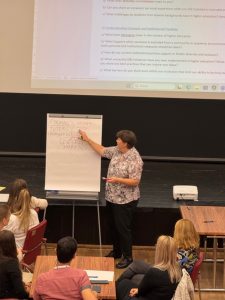
  

The eventful day concluded with a wrap-up session and follow-up initiatives as opportunities for new peer exchanges towards the joint efforts to further implement diverse and inclusive policies at Aurora universities.

Based on very fruitful exchanges in Kosice, Selma Porobic pointed out at least 5 ways in which universities can be more inclusive and promote equitable learning environments:

  • Develop inclusive policies and procedures and make sure that decision-making supports the inclusion
  • Provide further education, development and training to faculty and staff to enhance their inclusion and support in developing inclusive curricula and pedagogies
  • Foster inclusive values as part of the campus culture with awareness-raising events, workshops, dedicated open days and various student activities (
  • Ensure university resources in support of inclusion such as spaces, technology and infrastructure

As this event is a part of the CDP series aimed at strengthening the capacity for academic excellence and societal relevance of the Aurora associate partner universities by supporting them in establishing the regional hubs for sharing Aurora best practices, the main takeaway of all participants was that diversity and inclusion topic deserves much more attention and continuation through in-depth Aurora CDP events to follow in 2025.

The official website of the event for programme details, speakers and their contributions:

https://www.upjs.sk/en/information/international-relations/aurora-alliance/diversity-and-inclusion/

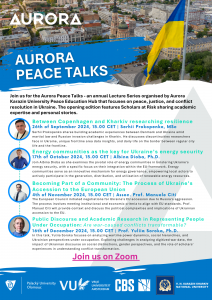
Join the First Series of Aurora Peace Talks

Join us from September for the first series of Aurora Peace Talks. This lecture series will feature talks by our colleagues from Kharkiv and beyond, and allows them to share their experiences and expertise.

Kharkiv city is one of Ukraine’s most important economic and industrial centres and the second biggest educational center in Ukraine,  known as the city of students and youth.  About 300 000 students (12 000 foreign ones)  found their home in one of the Kharkiv’s 11 universities and 38 higher educational institutions, including both public and private universitas, academies and specialized institutes.

The city and the region have since 2022 come under heavy attacks as one of initial targets of Russia’s invasion. The city and the region have been bravely fighting off the aggression.

 In the last month the town has been experiencing yet another wave of  heavy attacks with random bombardments of civilian object causing civilian casualties, evacuations and displacements of several thousand of its residents.  

Given the location of the city and Khakriv region, the situation for its citizens will remain precarious for long time ahead and we have in Aurora been working dedicatedly to provide the needed support, especially to our partners at Karazin Khakriv National university.

The speakers in this lecture series come from Karazin university but also other universities in Khakriv as we  want  to provide platform for their voices to be heard in these most challenging times for them. This first series in particularly features talks from Kharkiv Scholars at Risk at Copenhagen Business School.

The Peace Talks lecture series allows our colleagues to speak out, share their experiences but also their expertise as academics in addressing the devastation and future post-war recovery and peace building needs.

Support them by joining the following inspiring Talks, starting form September this year:

  • Between Copenhagen and Kharkiv researching resilience
    • 26th of September 2024, 15.00 CET | Serhii Prokopenko, MSc
    • Zoom Link
  • Energy communities as the key for Ukraine’s energy security
    • 17th of October 2024, 15.00 CET | Albina Dioba, Ph.D.
    • Zoom Link
  • Becoming Part of a Community: The Process of Ukraine’s Accession to the European Union
    • 4th of November 2024, 15.00 CET | Assoc. Prof. Manuele Citi
    • Zoom Link
  • Public Discourse and Academic Research in Representing People Under Occupation: Are war-caused conflicts transformable?
    • 16th of December 2024, 15.00 CET | Prof. Yuliia Soroka, Ph.D.
    • Zoom Link

For more information on the Aurora Peace Talks lecture series, contact Selma Porobic.


Aurora Statement in Support of Karazin University

It is with great concern that we have witnessed the latest developments in the ongoing Russian invasion in Ukraine. The recent advances by the Russian army into the Kharkiv region, as well as direct bombardments aimed at civilian targets in Kharkiv, directly jeopardize the safety of our partners, colleagues and friends of V.N. Karazin Kharkiv National University.

Several of our colleagues have had their homes destroyed. Yet despite these events, Karazin University remains dedicated to their academic mission.

Our thoughts are with everyone affected by this recent brutality. The resilience and strength demonstrated by our colleagues in Kharkiv are truly commendable, and we want to assure them that they are not alone.

The Aurora community knows that compassion, support and solidarity with our friends in Kharkiv are vital in these challenging times. Therefore, we sincerely hope that this message reaches our colleagues at Karazin University: We want you to know that Karazin University’s continuous operation and resilience serve as an inspiration to us all. You can always count on our support as the Aurora universities stand proudly by you now as before, and will continue to do so in the future.

Aurora Staff Training in Ohrid Equips Academics for International Teaching

On the 18th of April, the first Aurora Capacity Development Staff Training took place in Ohrid, North Macedonia. In a bid to enhance global learning opportunities, the COIL Staff Training, the event aimed to empower educators with the necessary tools and knowledge to implement Collaborative Online International Learning (COIL).

This event the first in a series of trainings, organised in the framework of Aurora’s Capacity Development Programme. These are organized by Palacky University Olomouc and VU Amsterdam, together with the associate partners. The aim of these training events is twofold. Firstly, we aim to strengthen the capacity of the Aurora associate partner universities for academic excellence and societal relevance. Secondly, we support them in establishing themselves as regional hubs for sharing best practices.

Bringing together a group of 30 participants, mainly from the University of Tetova and South-West University “Neofit Rilski”, the Aurora Ohrid Staff Training marks a significant step towards fostering cross-cultural educational collaboration. Led by COIL-expert Marina Vives from the Universitat Rovira i Virgili, the workshop provided the participating academics deep dive into the utilization of COIL, opening the doors to internationalize their curriculum together with other Aurora universities.

The training started with an icebreaker exercise, an important best practice when setting up a COIL. Then, Marina introduced the participants to the concept of COIL, and shared more best practices. The participants where then divided in groups and encouraged to start working on a COIL-course themselves. In a short time, the participants made promising, interdisciplinary COIL course concepts. The participants were excited to develop these concepts further and put them into practice.

Preceded by meetings between Aurora representatives and the management of the University of Tetova, the event set the stage for future collaborations. The staff training event empowered our associate partners to unlock their international potential through COIL. Through that, they will be able to further develop the internationalization of their institutions.

Aurora Newsletter – March 2024

Last week, Aurora published its first newsletter of 2024. The newsletter features a wide variety of news and community updates. It includes an interview with UP student Hanus Patera, who has been serving as Aurora Student Council president since July 2023. 

You can read back the Aurora March 2024 Newsletter here

Sign up for the newsletter here, so you are among the first the receive Aurora updates!

Also, follow us on Instagram, LinkedIn and Twitter, if you have not done so already!


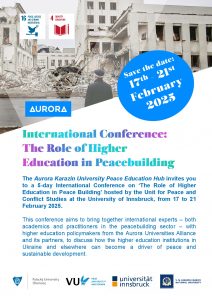
Save the date: International Conference on ‘The Role of Higher Education in Peacebuilding’

The Aurora Karazin University Peace Education Hub invites you to a 5-day International Conference on ‘The Role of Higher Education in Peacebuilding’ hosted by the Unit for Peace and Conflict Studies at the University of Innsbruck, from the 17th to 21st of February 2025.

This conference aims to bring together international experts – both academics and practitioners in the peacebuilding sector – with higher education policymakers from the Aurora Universities Alliance and its partners, to discuss how the higher education institutions in Ukraine and elsewhere can become a driver of peace and sustainable development.

More information, including the call for papers will be announced soon! 


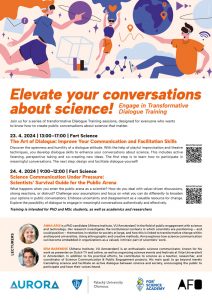
Elevate your conversations about science with our Science Communication Training at AFO!

During AFO, you are invited to two enganging sessions on science communication! Join us at Fort Science, as Anna Aris and Sem Barendse of the Vrije Universiteit Amsterdam lead help you improve your science communication skills! 

The first of these sessions, The Art of Dialogue: Improve Your Communication and Facilitation Skills, will take place on 23 April 2024 from13:00 to17:00. It will allow you to discover the openness and humility of a dialogue attitude. With the help of playful improvisation and theatre techniques, you develop dialogue skills to enhance your conversations about science. This includes active listening, perspective taking and co-creating new ideas. The first step is to learn how to participate in meaningful conversations. The next step: design and facilitate dialogue yourself!

Register here for The Art of Dialogue: Improve Your Communication and Facilitation Skills

On the 24th of April, from 9:00 to12:00, join us for the second session:  Science Communication Under Pressure: Scientists’ Survival Guide for the Public Arena. Here, we will focuss on what happens when you enter the public arena as a scientist and how to deal with value-driven discussions, strong reactions, or distrust.  In this workshop, we will explore the possibility of dialogue to engage in meaningful conversations authentically and effectively.

Register here for Science Communication Under Pressure: Scientists’ Survival Guide for the Public Arena


These Trainings are intended for PhD and MSc students, as well as academics and researchers.

This event is organised in the framework of the Aurora Research & Innovation for Societal Impact project (Aurora RI) and its Citizen Science thematic module in cooperation with Fortress Science Olomouc and Academia Film Olomouc.

Call for Incentive Research Collaboration

To foster tangible scientific and academic collaboration, this call aims to promote cooperation between researchers, and create new or consolidate existing scientific relationships. Its vision is to build robust scientific communities among the Aurora universities and raise awareness about Aurora on a broader academic level. This call will be repeated on an annual basis for at least four years and supports three key actions: 

Incentive and Collaborative Research Projects

This action supports concrete exploratory research activities by research teams with single or multiple disciplines that put forward the complementarity of competences and approaches.

Thematic Summer Schools

This action supports the organisation of thematic summer schools focused on disciplinary training for early-stage researchers and serves as opportunities for career development, knowledge sharing, and network/community-building.

Short-term Research Secondments for Early-stage Researchers

This action supports short-term mobility in a research laboratory or unit of an Aurora 2030 full-member university.

Submission Process

To submit a proposal for the three key actions, please read the Call for Incentive Research Collaboration and fill out the respective forms listed below: 

Once completed, please e-mail the application to aurora@u-pec.fr with the subject: Submission to Aurora Research 2024 Call_(Name of Principal Investigator)_(University of Principal Investigator). File name: Proposal KA (1,2, or 3)_Name (Principal Investigator)-University (of Principal Investigator)_(project acronym).

The deadline for the submission of proposals is 12 p.m. (CET) on April 30, 2024.

Karazin University Support

Karazin University Support

V. N. Karazin Kharkiv National University has been participating in the Aurora Capacity Development Programme since the Aurora Alliance’s establishment in November 2020. This activity aims to reduce disparities between the research-leading and research-emerging countries in Europe by assisting universities in Central-Eastern Europe to develop their institutional capacity for academic excellence and societal relevance.

With the Russian Federation’s sudden invasion of Ukraine in 2022 and the war that followed with various consequences for Ukrainian society, V. N. Karazin Kharkiv National University became directly affected and in need of comprehensive institutional support. In February 2022 Aurora Alliance universities responded by organising an immediate humanitarian response focusing on establishing the coordinated alliance-wide approach:

  • Solidarity actions: The Aurora universities’ leaders condemned the invasion and expressed letters of support and solidarity with Karazin University leaders underlining an explicit wish to – now and in the future – continue to offer any institutional support that we as an Alliance can provide.
  • Karazin University Rector nominated the Aurora CDS program leader as Karazin Support Coordinator.
  • Since March 2022, the Karazin Support Coordinator in close collaboration with Karazin’s leadership has been fully managing the emergency response as well as designing and implementing the long-term, systemic and institutional support for this partner university in Ukraine.
  • Aurora’s unique CDS programme in Central & Eastern Europe was then transformed into a tailormade support scheme to address the needs of the war-affected Karazin University.

As a result of this coordinated approach and alliance-wide efforts, the following key actions havebeen implemented so far that can be shared as best practices:

  • Protection of Aurora Karazin Colleagues – relocating staff to safety
  • Karazin Donations Fund – Urgent and targeted fundraising to address institutional needs
  • Support Action Plan – jointly devised long-term and structural support plan

Support Action Plan

Our Aurora Karazin University support action plan features seven key actions. 

  1. Whole of Alliance approach – Coordination
  2. Addressing urgent needs- Targeted Fund Raising and saving lives
  3. Structural and Systemic Approach – Support Action Plan
  4. Saving lives and livelihoods & supporting crises management
  5. Continued support to education in exile and capacity building training – International Summer School: Refugee Law & Rights
  6. Creating Karazin Peace Education Hub in Aurora 2030
  7. Inclusion of Karazin University in other Aurora projects

More detail on these actions can be found here.

PDF | Aurora Statement on Strategic Partnerships between European and Ukrainian Universities

Aurora Student Schemes 2023/2024

Do you want to broaden your horizons? Are you looking to meet students from all over Europe and develop your personal Schemes? 

In that case the Aurora Student Ambassador or Students Champion programme is perfect for you. 

Sign up before December 31st and participate in the activities stretching from January to June 2024. 

Lucky participants will be invited to participate in the Aurora Student Conference in Tarragona, Spain in February. 

1. Student Ambassador

If you want to be a part of an international community of students, the role of Aurora Student Ambassador will be perfect for you.

In this role, you will be given the opportunity to take part in a variety of online and in-person events, together with students from across all Aurora Universities.

You will be offered several international workshops that will boost you personal and professional development.

Your journey as Aurora Ambassador will start at the Aurora Student Conference, where you will learn everything about Aurora, and meet peers from across the world.

2. Student Champion

This role is created specifically for students that want to go the extra mile. Building on what your learned during the Aurora Student Conference, you will directly work on the key Aurora topics, in addition to the joint activities provided to Aurora Student Ambassadors

Students that amass at least 15 hours of combined participation in the joint program and the working groups will be given the certificate of Aurora Student Champion.

Register

Sign up using the link below to gain acces to all the opportunities Aurora has to offer. 

https://forms.office.com/e/UTnFRgMkpK

Aurora’s MoU on Sharing Infrastructure and Resources paves the way for research collaboration

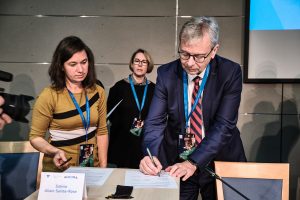
On October 17th, the signing of the Aurora Research Infrastructure and Resources Memorandum of Understanding (MoU) was one of the highlights of the Aurora Fall Biannual 2023. Thirteen Aurora universities, including the Aurora Associate partners and the Université Paris-Est Créteil, signed under this significant commitment to research collaboration within the Aurora Alliance.

The MoU serves a clear purpose and has two main objectives. Firstly, the MoU defines the intentions of partner universities to collaborate in research cooperation, focusing on Aurora’s mission and pilot domains. It aims to provide researchers within the alliance access to shared resources at partner institutions. 

Secondly, by working closely together, these universities will bolster their global research standing. They will promote international cooperation across diverse research areas and share research resources and data with research groups.


For those interested in exploring the MoU in detail, a publicly accessible version is available on the official Aurora website. This document showcases the commitment of universities to research collaboration and global knowledge sharing. 

Access the MoU

Aurora welcomes its universities to contribute their research infrastructure resources. By sharing resources and knowledge, you not only enrich your institution but also engage with a global community of research excellence. 

Ready to join this collaborative effort? Add your research infrastructure resources here.


Looking back at the Aurora Fall Biannual 2023

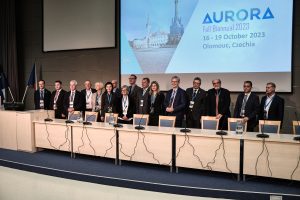
Last month, Palacký University Olomouc hosted the Aurora Fall Biannual 2023 on October 17th and 18th for in Olomouc, Czechia. The event brought together over 200 participants hailing from 18 universities from within the Aurora community and beyond.

Watch the Aurora Fall Biannual aftermovie

The Aurora Fall Biannual focused on taking stock of Aurora’s achievements as part of the European Universities initiative.

These European developments took center stage in the plenary sessions and panels:

  1. Aurora Pilot Phase: Aurora Model Alliance?
  2. The impact and role of European Universities on future of Higher Education in Europe
  3. Alliance Exchange – Balancing Education, Research Innovation and Social Responsibility
  4. Toward student-centered European University Alliances

Aurora’s commitment to sustainability was also highlighted during the event, with an opening presentation and plenary session dedicated to Aurora’s work on making our community greener and more sustainable.

Collaboration within Aurora was further strengthened by the momentous singing of a Memorandum of understanding on the sharing of research infrastructure, as well as the signing of the second version of the Multilateral Aurora Mobility Agreement (MAMA).


Next to the retrospective of Aurora’s remarkable accomplishments, the Aurora community came together to look forward to the exciting prospects that lie ahead.Participants also engaged in thought-provoking Thematic sessions on prominent Aurora topics suchs as COIL, the Aurora Competence Framework, and Technology Transfer.  

Want to relive the biannual or catch up on any sessions you missed? You can watch back the recordings of the plenary sessions below:

? 17/10/2023 –  Day 1

? 18/10/2023 –  Day 2

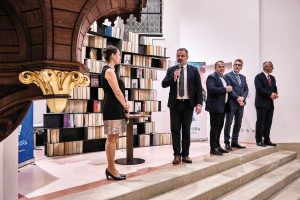
You can find a selection of photos below, the full photo gallery of the biannual can be downloaded here.

Call for Papers: Scholarly Book on Suburban Studies

We invite proposals for a forthcoming scholarly book on suburban studies. This interdisciplinary book aims to explore the complex, diverse, and dynamic nature of suburbs, their histories, and their futures. The book will seek to engage with a wide range of topics and themes related to sub/urban spaces, cultures, politics, and environments.

Call for Papers: Scholarly Book on Suburban Studies

We welcome proposals from scholars across various disciplines, including but not limited to literature, sociology, history, anthropology, urban studies, geography, geoinformatics, urban planning, environmental studies, and cultural studies. We are interested in contributions that critically examine suburbs as spaces of social, economic, and political inequality and exclusion, as well as spaces of creativity, innovation, and resistance. We encourage authors to engage with debates and discussions around issues such as suburbanization, gentrification, racial and ethnic segregation, environmental sustainability, and suburban history, cultures, and identities.

Proposals may address, but are not limited to, the following topics:

  • The literary reflection of suburban culture
  • The histories and genealogies of suburbs
  • The social and cultural practices of suburban life
  • The politics and governance of suburban spaces
  • The environmental impacts of suburbanization
  • The racial and ethnic dynamics of suburbanization
  • The cultural production and consumption of suburban spaces
  • The relationship between suburbs and the urban and rural landscapes
  • The future of suburban spaces and their potential transformations

We welcome proposals for individual chapters. Please submit an abstract of no more than 500 words along with a short biography (no more than 250 words) and contact information. The submission deadline for chapter abstract is October 31st, 2023. Accepted proposals will be notified by December 31st, 2023. Full chapters will be due on July 30th, 2024.
Please send your proposals to pavlina.flajsarova@upol.cz. If you have any questions or queries, please do not hesitate to contact us.


Editorial board:

  • Pavlína Flajšarová Palacký University, Olomouc, Czech Republic,
  • Jiří Flajšar, Palacký University, Olomouc, Czech Republic
  • Vít Voženílek, Palacký University, Olomouc, Czech Republic
  • Florian Freitag, Universität Duisburg-Essen, Essen, Germany
  • Becky Nicolaides, San Diego State University, San Diego, USA
  • Andrew Wiese, San Diego State University, San Diego, USA
  • Mauricette Fournier, Université Clermont Auvergne, France

The book is co-financed by the Erasmus+ programme under the project Urbanism and Suburbanization in the EU Countries and Abroad: Reflection in the Humanities, Social Sciences, and the Arts (2021-1-CZ01-KA220-HED-000023281).

CALL FOR PAPERS: Transdisciplinary Conference on Sub/urban Studies

We invite scholars and researchers from various disciplines to submit papers for an upcoming interdisciplinary conference on Suburban Studies that takes place on May 13-14, 2024 at Palacký University, Olomouc, Czech Republic. The conference aims to explore the intersection between various scholarly fields and the suburban experience, and how literature and other media have portrayed, shaped, and reflected suburban life and its evolution.

Transdisciplinary Conference on Sub/urban Studies 

Suburbanization has been a dominant trend in global urban development in the past century, with urban spaces and suburbs becoming the residence of choice for millions of people around the world. This transformation has had a profound impact on the social, cultural, economic, and political dynamics of urban areas. Literature, history, sociology, psychology, geography, geoinformatics and other disciplines have provided the methodology and research that has been important for the examination, critique, and celebration of the modern suburban experience, from its inception in the early 20th century to the present day.

We welcome papers that address various aspects of suburban studies from the perspective of diverse scholarly discipline, including but not limited to:

  • The representation of suburbs in literature
  • Suburban identity, history, and culture
  • Suburban sprawl and environmental issues
  • Class, race, and gender in suburban spaces
  • The impact of suburbanization on urban development
  • The influence of suburban literature on popular culture
  • Suburban fiction and the coming-of-age narrative
  • The portrayal of domesticity and family life in suburban literature and media
  • Suburban architecture and design
  • The role of suburban communities in civic engagement and politics
  • Periphery vs. centre

Submissions may be in the form of individual papers, panel proposals or round tables. Individual papers should be no longer than 20 minutes in length, and panel proposals should consist of three to four papers. Please include an abstract of no more than 250 words for individual papers, or 500 words for panel proposals, along with a brief biography and contact information.
The conference will take place on May 13-14, 2024 at the Arts Centre of Palacký University, Olomouc, Czech Republic, and will feature keynote speakers, panel discussions, workshops and round-tables. Selected papers will be published in a scholarly monograph by a major international publisher.

Conference language: preferred English, possible French

Please submit your proposals by October 30th, 2023 to pavlina.flajsarova@upol.cz. Notifications of acceptance will be sent by December 31st, 2023. We look forward to your contributions to this exciting and interdisciplinary conference on Suburban Studies

Conference organisers and committee:

  • Pavlína Flajšarová Palacký University, Olomouc, Czech Republic,
  • Jiří Flajšar, Palacký University, Olomouc, Czech Republic
  • Marie Voždová, Palacký University, Olomouc, Czech Republic
  • Vít Voženílek, Palacký University, Olomouc, Czech Republic
  • Jaroslav Burian, Palacký University, Olomouc, Czech Republic
  • Jakub Žejdlík, Palacký University, Olomouc, Czech Republic
  • Florian Freitag, Universität Duisburg-Essen, Essen, Germany
  • Becky Nicolaides, San Diego State University, San Diego, USA
  • Andrew Wiese, San Diego State University, San Diego, USA
  • Mauricette Fournier, Université Clermont Auvergne, France

Fees:
BA/MA/PhD students 50 Euros
Post-docs 80 Euros
Academics 100 Euros
Guests 25 Euros
Participants from project universities (Palacký University, Duisburg-Essen, Université Clermont Auvergne) FREE

The conference is co-financed by the Erasmus+ programme under the project Urbanism and Suburbanization in the EU Countries and Abroad: Reflection in the Humanities, Social Sciences, and the Arts (2021-1-CZ01-KA220-HED-000023281).

Aurora Newsletter – July 2023

Aurora has released its latest newsletter taking a cloaser look at the exiting developments surrounding our upcoming Aurora 2030 programme. In the newsletter we also look forward to the Aurora Fall Biannual, which will take place in October, in Olomouc.  

Next to that, the newsletter contains interesting news on participation opportunities as well as community news from our active and engaged Aurora Community, including an internview with our very own UP Aurora Education Coordinator, Marketa Semberova.

You can read the newsletter here.

Want to stay updated, and be among the first to read about the latest Aurora developments? Why not subscribe to the newsletter!

Aurora’s European University programme secured continued funding

Aurora’s European University programme secured continued funding

Palacký University Olomouc is delighted to announce that the Aurora European University programme has secured a second round of funding under the 2023 European Universities Initiative Call by the European Commission. This ensures that Aurora can deepen its existing cooperation and continue its mission in higher education transformation.

Michal Malacka, Vice-rector for strategy and external relations commented that: “Aurora’s successful continuation to the next phase is a great achievement of the entire Aurora team and community. It is also a great reward to a hard-working Aurora team at UP, and we are excited to continue building our European University with 8 excellent strategic partners.  For UP, Aurora ensures important partaking in the European higher education developments.”

The upcoming Aurora 2030 consortium, led by the University of Iceland, has been granted funding for a four-year period. This programme, which received 90/100 evaluative points from the Commission, builds on the significant progress made during the 2020-2023 pilot phase. Aurora President Jon Atli Benediktsson joyously shares:

“I am delighted that Aurora 2030 has been awarded a four-year continuation grant by the European Commission. This is a strong vote of confidence in Aurora’s mission to equip students with the skills and mindsets needed to address societal challenges. This new grant will allow us to continue working closely with our partners across Europe and beyond.”

The new programme will feature both a continuation of existing, as well as completely new Aurora activities. UP has significantly increased the role it will play in this new programme, with UP Aurora Institutional Coordinator, Selma Porobic commenting:

“I am very pleased to announce that UP has increased its leadership in a number of activities in the next Aurora programme, including Capacity Building and Community Engagement Work focusing on CEE countries and Ukraine, Engaging Regional Ecosystems and Stakeholders, Aurora Sustainable Campus, Aurora Student Community, and overall Sustainability of Aliance 2030+. We have also secured co-leadership in Education for Sustainable Devlopment, Innovative pedagogies, Academic collaboration, Social entrepreneurship and Innovation, Communication and dissemination, as well as Student services.”

More information on Aurora’s goals and priorities for this renewed commitment can be found here.

The Czech National Agency for international education, Dům zahraniční spolupráce, was also happy to congratulate UP being among the select Czech universities awarded continued support by the commission. They provided an overview of continuing and newly funded European University Alliances with Czech members here.  

About Aurora
The Aurora 2030 consortium comprises the University of Iceland (UIce), Vrije Universiteit Amsterdam (VUA), University of Innsbruck (UIBK), University of Duisburg-Essen (UDE), Copenhagen Business School (CBS), Palacký University Olomouc (UP), Universitat Rovira i Virgili (URV), Université Paris Est Creteil (UPEC), and the University of Napoli Federico II (UNINA) as well as seven associated academic and non-academic partners including University of East Anglia (UEA), South-West University “Neofit Rilski” (SWUNR), Pavol Jozef Šafárik University in Košice (UPJSK), the University of Tetova (UT), Kharkiv National University, European Forum Alpbach, Information Centre on Academic Mobility and Equivalence (CIMEA) who together span 13 countries.


Aurora Student Council

Aurora Student Council

The Aurora Student Council  is made up of representatives from across the Aurora Universities, working to support and help advise the Aurora universities’ senior management to help drive its collective ambitions forward. Each university is represented by two students. As a council, the ASC is committed to the social impact of our activities, with a common interest in the SDGs, engaging our student communities in everything we do. You can read more about the the Aurora Student Council here

The Aurora Student Council is headed by an elected president. The current president of the Aurora Student Council is Hanuš Patera (Hanus.patera@gmail.com). The student council also has a Vice-president, a secretary and a communications officers. All these roles are fulfilled by members of the ASC, and are elected internally on a yearly basis.  

Palacký University Olomouc is represented by two students. Our current Aurora Student Council Participants are: 

  • Hanuš Patera – ASC President
  • Lucie Baďurová – ASC Communications Officer

You can follow the Aurora Student Council on Intagram @aurorastudentcouncil.

Interested in becoming one of Palacky University’s Aurora Representatives, reach out to Niels Hexspoor for more information.

Aurora Student Ambassador Program

Aurora Student Ambassador Program

Do you want to broaden your horizons? Are you looking to meet students from all over Europe and develop your personal and professional competences? In that case the Aurora Student Ambassador programme is perfect for you. 

The Aurora Student Ambassador programme is  the easiest way for you to engage with the Aurora project. At the center of the activities are a series of online and in-person workshops that will focus on developing your professional skills and deepening your understanding of Aurora and its topics! Some of the work-shop topics include: 

  • Intercultural Competences
  • Presenting
  • Environmental Sustainability
  • Student Leadership
  • Social Media Training

Being an Aurora student Ambassador is also a great way to meet students with similar interests, both in Olomouc and abroad! 

Task Team Participation

To get the most out of your experience as an Aurora Student Ambassador, we recommend you sign up to join an Aurora Task team. You will join a working group of up international professionals, as well as other students, to give your opinion and contribute to the work done.

If you are able to dedicate between 12-40 hours, and want to develop  skills, work in a professional network  you should join an Aurora Task Team, as part of your Student Ambassador Experience! This will allow you to help build and directly contribute to Aurora. 

For more information on the possibilities for UP Students within Aurora, please contact Niels Hexspoor (niels.hexspoor@upol.cz).

The Aurora Student Conference brought together the Aurora Student Community

We are thrilled to share the highlights of the Aurora Student Conference, organized by Palacky University Olomouc on the 26th of May. The conference brought together the diverse layers of Aurora Student representation and was organized to foster connections, building a strong sense of community among students.

Held in conjunction with the Aurora Creative Writing Workshop, the Aurora Student Conference provided a unique opportunity for participants to engage with fellow Aurora students, from across various programs. This integration added an exciting dimension to the conference, allowing students to come together and forge new friendships.

With a total of 32 participants from nine different universities, the Aurora Student Conference was a melting pot of enthusiastic individuals. The group comprised members of the Aurora Student Council, dedicated Student Ambassadors and Champions, as well as members of the general student body.

What made this conference truly special was the pre-existing connections that many of the students had formed through previous Aurora opportunities, such as the Student Schemes, Biannuals, and other events organized across the alliance. These established bonds served as a strong foundation, enhancing the value of the event by deepening connections and fostering a genuine sense of belonging within the Aurora community.

Student mental health took center stage during the conference. Hanus Patera and Lucie Badurova, Student Council representatives for Palacky University Olomouc, led a compelling peer-learning workshop on mental health and mindfulness. Their insightful and practical approach to the topic truly resonated with the attendees. In addition, Niels Hexspoor facilitated an workshop on intercultural communication and competences, empowering students to reflect on and develop their intercultural skills.

Furthermore, the Aurora Student Conference provided a platform for an in-person meeting of the Aurora Student Council. While the council members convened, the session was also open to students who were not part of the council, promoting inclusivity and amplifying the diverse voices within Aurora.

As the conference drew to a close, participants were invited to a joint dinner. It was a delightful conclusion to an eventful and rewarding gathering.Stay tuned for more exciting events and opportunities to engage with fellow Aurora students as we continue to grow our Aurora Student Community.

Report – Aurora Student Conference

Looking back at the inspiring Aurora Creative Writing Workshop

From the 22nd to the 26th of May 2023, Palacký University Olomouc and the University of East Anglia joined hands to host the Aurora Creative Writing Workshop.

 In a testament to the power of collaboration, the Department of English and American Studies of Palacký University Olomouc, and the esteemed School of Literature, Drama and Creative Writing of the University of East Anglia partnered to deliver an exceptional Creative Writing Workshop. This event embodied the spirit of international cooperation, fostering a vibrant exchange of ideas and nurturing budding writers.

Workshop participants representing the University of Iceland, the University of Duisburg-Essen, and Palacky University

Classroom with students participating in the workshop

During the workshop, participants embarked on a creative journey, delving into various writing genres and refining their craft. Guided by their instructors Andrea Holland and Logan Scott, this immersive experience kindled participants’ imaginations, allowing them to push the boundaries of their creativity and hone their writing skills.

The workshop’s true essence lay in the invaluable opportunity for writers to engage with peers from diverse cultural backgrounds. Participants represented 5 different Aurora Universities and hailed from various countries across the globe. The workshop program comprised an array of dynamic sessions, including writing exercises, and workshops. The Aurora Creative Writing Workshop connected to the Aurora Student Conference, allowing for even greater connectivety among Aurora Students. 

Throughout the week, participants explored the richness of cross-cultural perspectives, fostering a sense of global awareness and understanding. The week culminated in an inspiring public reading, during which the participants presented the work they produced during the week. 

Beyond honing their writing abilities, the workshop fostered connections that extended beyond the workshop’s timeframe. Through collaborative workshops, peer feedback, and social events, participants formed meaningful relationships with fellow Aurora students, laying the foundation for future collaborations and mutual support in their creative journeys. 

As we reflect on the Creative Writing Workshop held between the 22nd and 26th of May 2023, organized by Palacký University Olomouc and the University of East Anglia, we celebrate the transformative experiences, cross-cultural connections, and enduring friendships that were forged during this remarkable event. A detailed breakdown of the event can be found below. 

Report – Aurora Creative Writing Workshop & Aurora Student Conference

Aurora Three Minute Thesis – Livestream on 08/06 at 15:00 CEST

On the 8th of June (15:00-18:00, CEST) doctoral researchers from the Aurora Universities  compete against each other in the The Three Minute Thesis competition, as part of PHD Impact. The competition, organized at the University of Iceland, will be livestreamed via Zoom. Join online to follow the 30 participants or to support your colleagues and friends.

Aurora Three Minute Thesis – Flyer

The Three Minute Thesis (3MT®) is a research communication competition developed by the University of Queensland (Australia). Doctoral researchers have three minutes to give a persuasive speech about their thesis and its significance. The idea is to improve researchers’ academic, presentation and research communication skills required to effectively explain a research topic in three minutes and in language suitable for a non-expert audience.

The competition boasts a wide range of 30 talented doctoral researchers, from a variety of different dicsicplines, fields and backgrounds. Join online to learn more about their research and see which of the selected doctoral researchers will win. More information on the Aurora Three Minute Thesis competition, including a full overview of the participants, can be found here.

If you want to join the life stream, please register here.


Aurora Fall Biannual at Palacky University Olomouc

Join us at the Palacký University Olomouc on October 17th and 18th for the highly anticipated Aurora Fall Biannual 2023 in Olomouc, Czechia.

More information on the biannual can be found here.

Experience a retrospective of Aurora’s remarkable accomplishments and delve into the exciting prospects that lie ahead. Engage in thought-provoking high-level panel discussions on the future of European Higher Education and connect with colleagues from across Aurora and much more.

Don’t miss this opportunity to be a part of something truly extraordinary. Register now to claim your spot at the Aurora Fall Biannual 2023.

Pre-register Now!

Connect with us on social media using #AuroraBiannualUP

Presentation of Aurora best practices at EARMA Conference Prague 2023

At the 2023 EARMA Conference in Prague, Aurora’s Marie Jadrnícková from Palacký University Olomouc, and Ignasi Salvadó-Estivill on behalf of the Universitat Rovira i Virgili, in Tarragona, presented and led a discussion on how Aurora developed tools to support research and innovation, such as the research infractructure map and the SDG Dashboard.

Their session focussed on concrete best practices and tools to increase collaboration in international projects, as well as the barriers and obstacles when developing and implementing these tools. These tools can help researchers and research support staff to raise the number of joint Aurora university proposals. They also explored how being a part of a University Alliance can substantially increase R&I collaborations and how a common research strategy within the alliance can attract more EU funding.

Among the best practices shared were Aurora’s successfully implemented joint projects such as VERSA (Video gamEs foR Skills training) and MSCA – Doctoral Network joint proposals, as well as organised Info Days and thematic workshops. By meeting regularly, Aurora’s working group of EU Research Managers created an integrated and high-trust platform where expertise and knowledge are pooled. The long-term ambition is to install an Aurora pre-award office to prepare and monitor joint applications for EU funding.

Both Marie and Ignasi are part of the EARMA Thematic Group on European University Alliances, which presented a poster how Research managers and administrators can contribute to the further development of EUAs.


Round table Aurora at EARMA Conference 2023

Join the Aurora Alliance CDS Network of Universities

Aurora Alliance consists of nine research-intensive universities in the EU, working together towards the long term vision of building the universities of the future. Aurora Alliance Capacity Development Support Programme (CDS) is specially designed to help reduce the disparities between the research-leading and research-emerging countries in Europe by assisting universities in Central-Eastern Europe and Neighboring Countries to develop their institutional capacity for academic excellence and societal relevance. The expected outcomes are to spread the Aurora Alliance principles, values, skills, working processes and practical learnings to some 30 target universities in Europe and beyond. 

To this end, Aurora Capacity Development Support Network of Universities (CDS Network of Universities) is being set up, with the purpose to articulate and strengthen the collaboration in supporting universities that are interested in the same objectives as Aurora Alliance member universities: in equipping diverse student populations with the skills and mind-set to address societal challenges as social entrepreneurs and innovators; in engaging with students and stakeholders at regional, national, European and global level; and in making our universities sustainable organisations.

The purpose of the Network is the following:

  • To support members in developing /sharing expertise in the areas connected to the Aurora objectives
  • To support members in applying this expertise to improve their universities’ practice in meeting its vision & mission
  • To strengthen cross-European (including neighbouring countries) links between higher education institutions and decrease the gap between regions with leading and emergent universities
  • In observing the above stated to contribute to the European Research Area and Europeans Education Area objectives towards a prosperous and harmonious Europe

The Aurora CDS Network of Universities currently consists of:

Six Aurora Alliance member universities: Palacky University Olomouc (Czech Republic);Vrije Universiteit Amsterdam (Netherlands); University Duisburg-Essen (Germany); University of Naples Federico II (Italy); Copenhagen Business School (Denmark);  University of Innsbruck (Austria)

Four Associate Partner universities of the Aurora Alliance: Pavol Jozef Šafárik University in Košice (Slovakia); South-West University “Neofit Rilski” (Bulgaria); University of Tetova (N.Macedonia); V.N. Karazin Kharkiv National University (Ukraine);


We are now looking for additional collaborating universities! 

How to Join the Network – Criteria and Selection Procedure

The Aurora CDS Network of Universities is an inclusive platform for universities that want to work with Aurora’s common objectives. Applicant universities should freely express interest in the Aurora Alliance CDS mission as described in the Introduction section of this document by submitting a Letter of Intent and a University Fact Sheet to Selma Porobic via email at selma.porobic@upol.cz

The criteria for joining us are the following:

  • Applicant universities show an understanding of the key objectives of the Aurora Alliance programme and are interested to further at least some of these objectives at their institutions  
  • Applicant universities express willingness to invest time and bring their resources and expertise to the collaboration
  • Applicants are made aware of external funding needed for collaboration activities developing in the Network

Applicants will be assessed on a rolling basis 2021-2023 by the CDS Task Team, led by Palacky University Olomouc with Vrije Universiteit Amsterdam as co-lead. In the assessment, the opinion of the Associate Partners will be sought. 


What We Offer – Network Programme

During the 2021-2023 period of collaboration, we focus our exchanges on awareness-raising training events and projects developed together focusing: 


  • Virtual Mobility/Internationalization at home 
  • Co-creation and Service Learning
  • Inclusive, Equal and Diverse Education
  • Academic Competence Skill in Social Entrepreneurship.

The continued programme and activates of the Network will be a subject of evolving collaboration and co-sharing of interests in the internationalisation of higher education. 


Cooperation Arrangement

There will be no legally binding duties between the members as a result of entering into the Network collaboration. Any bilateral agreements between the Network universities are subject to the inter-institutional arrangements and internal institutional regulations and policy in international cooperation.


For more information on Aurora Alliance and CDS programme visit:

www.aurora.upol.cz  and www.aurora-universities.eu

UP and Aurora moving forward with the European University initiative

Palacký University Olomouc is happy to announce that the Aurora Alliance submitted its new proposal under the European Universities Erasmus + Call, for the intensification of prior deep institutional cooperation aiming at the systemic change of European Higher Education.

By setting innovative and diverse models of long-term institutionalized cooperation between higher education institutions across Europe, the European Universities initiative supports higher education institutions to achieve greater quality, performance, attractiveness and international competitiveness. It also promotes European values and a strengthen European identity.

In the next programme phase, from 2024-2028, the Aurora Alliance will be led by the University of Iceland and will welcome the University of Paris-Est Creteil as a full member, replacing the University of East Anglia, who will continue as an associate partner.  

The new bid will extend Aurora’s commitment to positively impact society through its main priorities: teaching and learning for societal impact, engaging and collaborating through inclusive communities, being pioneers in sustainable endeavours, and providing excellent challenge-based research and innovation support.

Together, the 9 Aurora partners will continue to deliver on the joint mission and vision of equipping students with social entrepreneurial skills and mindsets, building on the results achieved in the first phase.

The activities of the new proposal were written over the course of the last six months in a close collaboration with of the experts in the field from across 9 universities, the Institutional Coordinators and the Aurora Central Office in Amsterdam. It has three main objectives:

  1. Equip students and staff with the skills and mindset to become social innovators, changemakers and entrepreneurs;
  2. Foster academic collaboration and community building to establish a long-term Aurora identity; and
  3. Collaborate with external stakeholders and deepen student’s engagement in education, research and outreach.

Mirjam van Praag, President of Vrije Universiteit Amsterdam, said:

So far, it has been a pleasure to lead the alliance through the start-up phase of the first bid with various initiatives for Aurora staff and students that we really can be proud of. I am very confident in continuing our collaboration with the University of Iceland as the lead.”

Jón Atli Benediktsson, President of the University of Iceland and newly re-elected President of the Aurora, expressed how pleased he was:

“After seeing the hard work and dedication of the staff and students at our universities, I am confident that the Aurora collaboration will grow and create more opportunities for our students, faculty, and the greater community”.

From 2020-2023, Aurora has been part of the 44 European University Alliances co-funded under the Erasmus+ programme led by VU Amsterdam. The current call, for both new and the continuation of existing alliances, attracted a total of 65 proposals, gathering around 500 higher education institutions as full partners. More information can be found here.

Palacký Summer Law School: Human Rights Policy Legal Clinic

From 24 July to 4 August 2023, the Palacký University Faculty of Law organizes the Human Rights Policy Clinic within a 2-week-long Summer Law School. This Summer Law School will allow you to experience the Human Rights Policy Legal Clinic, which normally takes a whole semester, condensed in two weeks intensive schedule.

Program Description

A Legal clinic is a special form of legal education, combining theory and practice, designed to teach not only knowledge, but also develop skills and instill values, and promote social justice. Legal clinics exist in many forms. One of them is a Policy Legal Clinic, where students do not help individual clients, but rather focus on existing legal problem from a policy perspective, usually by analysis of legal regulation and its practical application, identifying problems and deficiencies, and suggesting general measures, such as changes to legal regulation or other policy-oriented activities, to address the problem.

The Summer Law School will allow the participants to develop:

  1. knowledge in the area of international, European and comparative human rights law (proportionality, horizontal effect, tension between universalism and particularism, equality, positive and negative obligations) and specific rights (human dignity, freedom of speech, socio-economic rights, environmental rights),
  2. develop wide range of analytical, creative, problem-solving, legal writing and critical thinking skills, increase their sensitivity to human rights issues in general, but specifically in cross-cultural context, and
  3. understand the importance of human rights monitoring, policing and advocacy.

During the two weeks of the Summer Law School, participants will engage in interactive sessions with human rights experts from various fields and backgrounds (attorneys, judges, human rights activists), developing their knowledge and relevant skills, which they will use over the course of the whole summer school when working in teams on analytical human rights policy projects, starting from defining and structuring the analyzed problem, researching and discussing it, presenting to others and writing and receiving feedback to their policy paper.

Students will be able to get enrolled in a formalized course at Palacký University, granting them ECTS credits.

Date and Location 

Dates of the academic program: 24 July to 4 August 2023

Venue: Palacký University in Olomouc, Faculty of Law – 17. listopadu 8, Olomouc, Czech Republic

Registration

Full fee: 490 EUR (includes academic program and catering during the academic program – 2 coffee breaks and lunch each day)

Aurora Alliance students can participate in the academic program free of charge. They may pay an optional fee of 180 EUR in order to be provided with catering during the academic program (2 coffee breaks and lunch each day). If not, there are numerous opportunities in walking distance from the summer school venue for coffee, snacks, and meals.

Participants are responsible for arranging their own travel and accommodation.

This summer school offers 16 places for Aurora Alliance students and 24 places for students from other universities.

Registration is done by email, contacting Radana Kuncova (radana.kuncova@upol.cz).

Contact

To register or for more information, please contact Radana Kuncova (radana.kuncova@upol.cz)

Summer Law School – Flyer

Summer School Remote Ethnography – a methodological tool-kit

This summer school is divided into two parts. The first part will take place online as a preparatory meeting on Friday 14 July 2023. The second will be held at Palacky University Olomouc 31 July – 4 August 2023.  It connects introductions to Open Source Research, remote sensing, interviewing, oral history, source criticism and decolonial theory.  


Description:

This summer school is intended to provide students and junior researchers with a basic toolkit in remote ethnography. It aims to enable a type of research in places of limited accessibility that can provide many of the same holistic, in-depth and detailed insights that classical ethnography does. Many of the teachers invited will be specialised in Xinjiang, China or Central Asia. Therefore, many texts and examples will concern this part of the world. Still, participation is not limited to students or researchers interested in these geographical locations and aims to provide a methodological toolkit that can be employed globally.

As an increasing number of areas in the world are becoming inaccessible or ethically untenable to do on-the-ground fieldwork, anthropologists and other researchers interested in these regions turn to remote methods. Online data and data gathering are at the center of this necessary refocus. Yet, many other types of data and material can be as important in coming to terms with realities on grounds inaccessible. This summer school presents some of these and methods of accessing them. Also, recent trends in remote research focus on isolated analyses of a disparate set of data, while the approach taught in this summer school encourages researchers to combine and triangulate these data types with each other, to let the data talk to each other. The idea of remote ethnography is that ethnography is a holistic endeavour that entails a degree of immersion and acquisition of general cultural knowledge and competencies. This means creating an analytically and methodologically sound conversation between government tenders, diaspora interviews, witness accounts, satellite images, leaked speeches, popular culture productions, propaganda and lists of detained people while embedding all of this in the long-term cultural knowledge of the region and its history, political economy, narratives, logics and languages. 

The summer school  draws on previous remote research traditions, such as those established during WW2 and the Cold War, for inspiration and to craft an epistemological framework for analysing very different data. At the same time, it seeks to critically reflect on the role of the researcher and her potential contribution to colonial-type knowledge production. Critically debating the dangers of abuse for counter-insurgency and exploitation of the weak that our research may help open up are crucial parts of a developing ethics code which the workshop seeks to introduce and discuss.


In-person and Online:

The summer school is divided into two parts. The first part will take place online as a preparatory meeting on Friday 14 July 2023. The second will be held at Palacky University Olomouc 31 July – 4 August 2023

The online part will be a full day preparatory meeting including three two-hour sessions. The first session consists of a short round of introductions and short introductions into Remote Ethnography as a concept, the summer school and the methods taught in it. the second session entails somewhat more elaborate informal presentations of each participant’s work, material and interest going forward as well as some of the Remote Ethnographic work already being done or in planning by some of the convenors. The third session is devoted to preparatory readings for the workshop. The students receive a list and a number of PdF texts to prepare for the in-person summer school two weeks later.

The in-person part will cover five days. Each day has a dedicated focus-topic and one person from the organising team in charge. At the end of the summer school each student leaves with the design of a small remote ethnography related research study that they will pursue in the following two months.


Topics of focus:

The in-person part is divided into the following topics with (persons in charge; and suggested invited speakers) added in parentheses. 

0) Introduction and overview, history of remote research and sources to draw from (Rune Steenberg; Robbie Barnett, …)

1) Online ethnography, discourse analysis, video analysis… (David O’Brien; Hanna Burdorf, Gene Bunin, Hacer Gonul, Vanessa Frangville, …)

2) Interview techniques and oral history (Muqeddes Mijit; Rian Thum, …)

3) Remote sensing for dummies – satellite imagery, Google Map/Google Earth/Open Street Map, etc. (Martin Lavicka; Robbie Barnett, Björn Alpermann, Nathan Ruser, …)

4) Source criticism, fact checking, triangulation & decolonial theory (Vanessa Frangville; Philipp Lottholz, Deniz Yonucu, Madina Tlostanova…)

5) Bringing it all together in an holistic Remote Ethnography – and your own data and research (Rune Steenberg; …)

Topics 0) and 5) will not cover full days, nor probably will 3) and 4). 1) may span over more than one day.

The in-person part will be held hybrid with online participants allowed to join via BBB.

Enrolling:

Interested? Please contact Martin Lavicka (martin.lavicka@upol.cz) by the end of May. 

Recording:

For those who present full lectures at the workshop, we plan to record them and to put them up online as Youtube and Podcast episodes.

Call for Nominations – Aurora Fellowship at UDE

If you are interested in deepening your cooperation with your partners the University of Duisburg-Essen, Germany, sign up now for the Aurora Fellowship at UDE!

The Aurora Fellowship is a two-week programme that we were able to establish with the support of the Förderverein der Universität Duisburg-Essen (the University of Duisburg-Essen’s sponsorship association).

The aim of this programme is to invite internationally renowned researchers working within the Aurora European Universities Alliance to UDE, allowing them to engage in intensive exchange with our University’s researchers, doctoral candidates, postdocs and students. For UDE, it is particularly important to involve local communities and the wider region, which is why the Aurora fellow is to give a public lecture for interested members of the public.

The thematic focus of the fellowship is centred on the four pilot domains that UDE is committed to as a university together with the Aurora network:

▪ Sustainability and climate change
▪ Digital society and global citizenship
▪ Health and well-being
▪ Culture, diversity & identity

The focus is on a different one of the four pilot domains each semester. This was started off with ‘Culture, diversity & identity’ in the winter semester 2022/23. In the summer semester 2023, the focus will be on sustainability and climate change.

The programme: As part of this programme, the University of Duisburg-Essen invites nominations once per semester for a two-week Aurora Fellowship to the amount of €5000. All UDE members are eligible to submit nominations. Researchers from the nine associated Aurora universities can be nominated. Alongside accommodation and the reimbursement of travel expenses, candidates can receive prize money of €2500.

The Aurora Fellowship helps develop skills that enable active participation in shaping contemporary social, political, environmental, economic or healthcare change. A public lecture will also present and explain exciting findings from the most recent research on major contemporary challenges in a comprehensible way to interested members of the public. 

Candidates must be nominated by members of UDE, thus interested academics should get in touch with their contacts in Duisburg-Essen.

Announcement Aurora Fellowship – Pdf.

Aurora Summer School at UDE – The Enkelfähig Economy: Sustainable Transformation of Business Models

Our partners at the University of Duisburg-Essen in Germany are organizing a Summer School on the The Enkelfähig Economy: Sustainable Transformation of Business Models. This summer school will take place between 19.06.2023 and 07.07.2023.

The summer school looks at the ways companies can be made more sustainable, by looking at the following factors: 

  • Impact Measurement
  • Business Model Analysis
  • Business Model Optimization

For more detailed info, take a look at these files: 

Flyer – The Enkelfähig Economy: Sustainable Transformation of Business Models 

Description of The Enkelfähig Economy Summer School

To apply, send an email aurora-register@uni-due.de with the following info:

  • Full Name
  • Date of Birth
  • Place of Birth
  • Email Address
  • Proof of Study at UP

Registration will be open until 15.04.2023. This course is open to all master’s students, and you can earn 5 ECTS upon completion.

You are eligible to receive funding for your participation in this summer school, covering your travel and accommodation. More information on the funding opportunities is found here. 


Presenting Aurora’s Capacity Development and Eastern Partnership at ACAs “What’s New in Brussels”. 

On the 2nd and 3rd of February, Selma Porobic was invited to ACA’s (Academic Cooperation Association) seminar “What’s new in Brussels? – Recent Developments in European Policies and Programmes”  to share Aurora’s pioneering work on Eastern Partnerships exemplified by its Capacity Development Support (CDS) programme with special focus on its institutional support to the V.N. Karazin Kharkiv National University in Ukraine.  

In her session, “Working with Global Regions – Eastern Partnership“, Selma Porobic shared the results and best practices of Aurora’s unique CDS programme in Central & Eastern Europe, and how it was transformed into a tailor-made support scheme to address the needs of the war-affected Aurora associate partner, V.N. Karazin Kharkiv National University. These activities set Aurora apart from other European University Alliances.  Since  March 2022, as Ukraine Support Coordinator in Aurora, and in a close collaboration with Karazin’s leadership, she has been fully managing the emergency response as well as designing and implementing the long-term, systemic and institutional support for this partner university in Ukraine, which include fundraising, relocating displaced academics and staff, and joint online education on peacebuilding. More detailed information can be found here.   

In this panel, Selma also introduced the continuation of this engagement in the next phase of the Aurora Alliance’s programme as part of the work package Capacity Building and Community Engagement. During the next four years, another fully dedicated task team, Karazin University Peace Education Hub, led by Palacký University Olomouc, plans to work towards further strengthening of the Karazin University’s capacity for education and training in conflict transformation, and peace building within the wider Kharkiv region.

After two consecutive years online due to COVID, ACAs flagship seminar “What’s new in Brussels?” was this year organized in-person in Brussels, providing a full overview of the latest developments in the European Higher Education Area, with a global perspective.  

The 2023 agenda offered a wide range of high-level panels and gathered various policy advisors, membership associations and European Commission representatives, such as Vanessa Debiais-Sainton, Head of the Higher Education Unit  at the  Directorate-General for Education, Youth, Sports and Culture. The sessions addressed the latest trends in the European higher education and research and innovation including the European University Initiative’s policy developments and long-term funding, as well as other areas of European University Strategy like Diversity and Inclusion. Different approaches, opportunities and programmes for global partnerships were also introduced focusing regional collaborations within the Eastern Partnership, Western Balkans, Sub-Saharan Africa & South Mediterranean.